13 Best Apps for Restaurants to Streamline Operations and Boost Sales
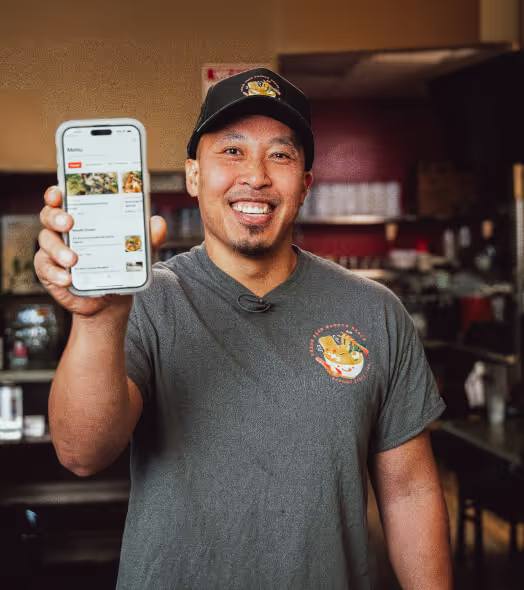
Apps like OpenTable, 7Shifts and Sortly can help you save time on tasks so you can focus on other restaurant needs. The Owner.com mobile app is a great tool that can help you create your own branded app to help drive sales.
- To make the day-to-day less busy, there are many apps available that restaurant owners can use.
- These apps can save you time on reservations, inventory, employee scheduling, order delivery and more.
- When picking an app for your restaurant, consider ease of use, how well it syncs with your current tools and reviews.
Running a restaurant means juggling staff, suppliers, reservations and delivery platforms—all while protecting margins and keeping operations running smoothly. I’ve worked with enough restaurant owners to know this: most aren’t struggling because they don’t work hard. They’re struggling because they’re buried in manual tasks that software should be handling.
In this guide, I’ll break down the 13 best apps for restaurant owners and how each one fits into your operation. We cover tools for payments, reservations, delivery, inventory and marketing so you can see where they add value and whether they make sense for your team.
1. Owner.com

Common fit: Independent restaurants that want to grow direct online orders and want more control over their brand and guest data
We built Owner.com to give operators their own high-performing website, online ordering and marketing engine all in one place, so you actually own the relationship.
Your site turns into a branded, conversion-focused ordering experience, and behind the scenes, smart email and text campaigns keep guests coming back.
On top of that, loyalty programs, re‑engagement and automation tools are all wired around one simple idea: When restaurants control their digital presence and their customer data, they make more money and build stronger relationships. That’s exactly what Owner.com is here to do.
2. OpenTable

Common fit: High-volume reservation restaurants
OpenTable is a massive marketplace that helps you manage your floor plan and puts your name in front of people looking for a place to eat. It does a decent job of automating the "where do we sit?" chaos, but it’s essentially a middleman.
You get the bodies in the seats, but you’re often paying a fee for every cover that comes through their platform. It’s a heavy-duty tool for busy dining rooms, but you have to keep a close eye on those monthly bills to make sure you aren't paying for customers who are already walking through your front door.
Most owners appreciate how the app handles waitlists and "no-shows," but recent App Store reviews point to a steep learning curve for new staff.
3. Resy

Common fit: Booking tables at popular, high-end restaurants
Resy is a restaurant reservation app. It lets you manage online bookings, control table inventory and reduce no-shows with automated reminders and prepayments. It gives you visibility into who’s booking, when they’re coming in and how your floor is filling up, which helps you make smarter staffing and seating decisions.
I like it for restaurants that rely on reservations and want better control over demand without juggling spreadsheets or manual systems.
4. DoorDash

Common fit: High-volume restaurants using third-party delivery
DoorDash handles the entire delivery side—orders, payments and drivers—so you don’t have to build your own logistics just to offer convenience. For many restaurants, I see it as a way to capture incremental sales and stay visible in a market where customers expect delivery as an option.
The reality, though? It’s powerful for reach, but it comes with fees and less control over the experience. I like using it strategically—to drive volume and attract new guests—while ensuring that direct orders through my own website remain the most profitable channel.
5. SpotHopper
Common fit: Digital marketing with social media content creation
SpotHopper helps restaurants take online orders directly through their own website, without handing control over to a big marketplace.
I like it because it keeps the relationship between you and your guests intact. Orders go straight to your system, they help you post more on social media and send more emails.
If improving your marketing campaigns is important to you, this feels like a cleaner way to do it. Especially for operators who want to manage their brand on every channel.
6. UpMenu

Common fit: Centralized online ordering with branded website and app
I’m always checking out tools that help restaurants take more control of their business and UpMenu really stood out. It’s a slick online ordering platform that lets restaurants take direct orders right from their own branded website and mobile app.
What I like most is how it keeps the spotlight on direct sales and relationships. Orders drop straight into your system, you own your customer data and you can run loyalty or promo campaigns that actually strengthen your guest connections.
For any operator who’s serious about profitability and customer retention, UpMenu is a smart way to take the wheel on your digital ordering experience.
7. Square

Common fit: Quick-service and small restaurants
You want your POS to take orders, run payments and stay out of the way during a slammed Friday night. Square does that well. It’s a clean, easy-to-set-up POS that handles card payments, basic inventory tracking, team permissions and reporting, without a long installation process or complicated contracts.
Square is built payments-first. It’s strong at processing transactions and giving you operational visibility. But if your goal is to drive more direct online orders, build real customer relationships and increase repeat revenue, you’ll likely need to layer in other tools alongside it.
8. Uber Eats

Common fit: Accept, monitor and manage delivery or pickup orders
Uber Eats is basically the “I don’t feel like cooking” button on your phone. You open the app, scroll through a bunch of nearby restaurants, tap what you’re craving, and a courier shows up with your food like magic.
For restaurants, it’s a huge marketplace where tons of hungry people are already browsing, which can mean more orders and new guests discovering the brand. In return, Uber Eats handles delivery logistics, takes a cut of each order, and lets restaurants manage their menus, pricing and prep times on the platform.
9. Chowly

Common fit: Multi-platform delivery integration
Chowly is the ultimate middleman for your restaurant's tech setup. It's an app that seamlessly integrates all your different third-party ordering platforms right into your existing POS. So, instead of juggling multiple tablets and systems, Chowly brings everything together in one place, making your order delivery management a whole lot easier.
10. Hootsuite

Common fit: Content scheduling for growing restaurants
Interested in stepping up your social media game? Social media marketing is a very helpful tool for restaurants, and as a busy restaurant owner, you can benefit from an app that could automate it.
This is where Hootsuite steps in. Hootsuite helps you manage and schedule content across multiple social media platforms—all on one dashboard. You can schedule posts in advance, monitor engagement and track analytics. With this app, you can save so much time planning your content so you can focus on what really matters—running your restaurant.
11. 7Shifts

Common fit: Shift scheduling for full-service restaurants
Looking to save time on creating employee schedules? 7Shifts is the perfect app to make this easier for you. Employees can easily check their schedules, request time off, and chat with their managers, all from their phones.
The cool part? It's all about making restaurant scheduling less of a headache. By using this app, you can streamline your restaurant operations, creating happier customers and staff.
12. Sortly

Common fit: Back-of-house stock visibility
Sortly can help you organize and create a detailed inventory of your kitchen supplies, ingredients and equipment. You can also add photos with descriptions and assign categories or tags to items, making them easier to find.
With Sortly, restaurant owners can track stock levels, monitor usage and streamline their ordering process. It's a versatile tool that can help keep a restaurant's back-of-house operations running smoothly and save time on inventory management.
13. BlueCart

Common fit: Streamlined supplier ordering for growing restaurants
If you want to simplify vendor ordering, BlueCart could be a great app. BlueCart is the ultimate ordering assistant for busy restaurant owners. This app assists with tasks such as placing supplier orders, managing inventory and tracking deliveries.
Flip through catalogs from your go-to suppliers, create and send orders in just a few taps, and sit back while BlueCart handles the rest, including sending you real-time updates on your orders and deliveries.
Plus, its restaurant inventory management app features help you track stock levels and reduce waste so you always have the fresh ingredients you need on hand.
How to choose an app for your restaurant
I’ll be honest—most restaurant apps promise the world. Fewer actually make your life easier. When I’m looking at software for a restaurant, I’m not asking, “Does this have cool features?” I’m asking, “Will this save time, reduce mistakes, and help me make more money without adding complexity?” That’s the filter. Here’s what actually matters:
- User-friendly: Look for an app that's as easy to use as your favorite kitchen gadget. You want something intuitive that you won’t need too much time to figure out.
- Time-saving features: Your app needs to be able to help take the load off of your busy schedule. Think about what tasks eat up your time the most — managing reservations, tracking orders or keeping tabs on inventory — and find an app that can easily handle them.
- Seamless syncing and integration: Your restaurant's systems should be like a well-oiled machine, and your app needs to fit right into the mix. Make sure it integrates with your existing tools, like your POS or inventory software, so everything stays in sync without any headaches.
- Support on speed dial: You never know when you might need backup. Choose an app that offers reliable customer support so you can get help pronto if anything goes wrong.
- Positive reviews: Like the ones above, reviews can tell you a lot about an app. Be sure to check these out beforehand to get an idea of what customers are saying about it.
Drive sales with your own custom app
With the right app, you can save more time as a busy restaurant owner and make your operations more efficient. With apps taking over some of the heavy work, you can focus on other business needs and growing your sales.
If you’re looking to build a mobile app for your restaurant, try out a demo of Owner.com to see how we can help you attract more customers and drive more sales.