Digital Marketing for Restaurants: The 2026 Playbook for Driving More Orders
Learn my top digital marketing tricks to help you drive more sales.

- Digital marketing only works when it drives direct orders, not just visibility
- Your website is the hub that connects ads, social, search and repeat customers
- Local SEO, paid ads and social content all need to work together, not in silos
- Owner.com can help restaurants unify their website, ordering and marketing so everything drives more direct revenue
Restaurants that are actually growing right now aren’t just “posting on Instagram” or hoping to rank on Google. They’ve built a system that consistently brings in new customers and turns them into regulars.
When I talk about restaurant online marketing, I’m talking about that full system—how someone discovers you through search, sees you on social and hears from you directly through email or text. If you’re not thinking about it this way, you’re leaving growth on the table.
In this guide, I’m going to walk you through how to market your restaurant online.
Dominate local search and AI discovery
Your website is the central hub of your marketing. Every ad, social post and Google result ultimately leads people back there, and it’s often the first place potential guests go to decide if they’ll order or visit.
Let’s see how you can set up your digital presence for success.
Make your website fast and mobile-friendly
A restaurant website doesn’t need to be fancy. It needs to do one thing well—make it easy for someone to order directly from you. If it’s slow, clunky or hard to navigate, people don’t stick around to figure it out. They leave and order somewhere else.
The majority (60%) of traffic is mobile anyway, so the experience has to be built for a phone first: a clear menu, hours up top, location easy to find and a direct path to place an order or make a reservation in a few taps.
I’ve seen a big difference when restaurants shift to a system built around direct ordering instead of just “having a website.”
For example, Saffron Indian Kitchen, which operates across multiple locations, moved to a more streamlined direct ordering setup and scaled its online sales from a few thousand dollars a month to over $170K/month. The common thread wasn’t just more traffic—it was that customers could actually land on the site and complete an order without friction.
Optimize your Google Business profile to get found
Your Google Business Profile is often the first place people interact with your restaurant, even before your website. If it’s incomplete or outdated, you’re making it harder for people to choose you. I suggest always starting with the basics:
- Make sure your address is accurate
- Keep your hours up to date
- Use high-quality photos that actually reflect your food
- Make your menu easy to access without extra clicks
After that, consistency drives visibility. I’ve seen restaurants improve how often they show up just by staying active here. Post updates regularly, respond to reviews quickly and use natural local language in your profile. It helps you show up more often when people search for places nearby.
The goal is simple. When someone finds you on Google, they should immediately understand what you offer and feel confident ordering or visiting. A strong Google Business Profile is the foundation of a restaurant's local SEO footprint.
Use SEO to show up in local searches
SEO just means writing and structuring your website so it shows up when people nearby search for food in natural, conversational ways. The approach focuses more on “how people actually ask for food on Google,” like “best brunch open now near me” or “gluten-free pizza nearby.”
I usually tell restaurants to keep this very practical. You want your website to clearly answer those real questions. Add simple FAQ sections covering dietary options, hours and ordering. Make your menu easy to read and easy for Google to understand, not buried in PDFs or messy layouts.
One of the biggest rules of online marketing for restaurants is that the clearer your information is, the easier it is for search engines to match you with people who are already ready to eat.

Boost visual engagement with these social media strategies
Most restaurant social media marketing has shifted toward what people can actually see in the moment. Static posts don’t move the needle the way they used to. People scroll fast, decide fast and eat with their eyes first.
That’s why short-form video has taken over—it fits how people discover food now. They’re not looking for polished brand campaigns. They want quick, real food clips they can almost taste through the screen.
For restaurants, this shift actually helps. You don’t need a production team or complicated strategy. You just need consistent, simple content that shows what your food looks like, how it’s made and what it feels like to eat there.
Leverage Reels and TikTok
Short-form video on Instagram and TikTok is one of the easiest ways for restaurants to get discovered right now. I usually recommend starting with what you already have in the kitchen. Show the grill, the plating or a dish coming out of the oven fresh. People don’t want perfection here. They want real food, made in real time.
The best-performing content is usually simple and repetitive. A quick “behind the scenes” of prep, a close-up of a signature dish or even a staff member putting together an order can all work. The goal is not to go viral every time. It’s to stay visible in a format people actually consume daily. Over time, that builds familiarity— and familiarity drives orders.
Focus on user-generated content and local influencers
User-generated content is one of the most underrated growth tools for restaurant digital marketing. I always tell owners to make it easy and natural for customers to share their experiences.
That can be as simple as encouraging tagging, offering small perks for posting or just having a space people actually want to take photos in. Once customers start sharing, your restaurant basically markets itself through their feeds.
On top of that, local micro-influencers can help you reach very specific neighborhoods without spending big budgets. These are creators with smaller but highly local audiences.
Encourage real-time engagement with Stories
Instagram Stories work best when you use them like a live feed of what’s happening in your restaurant. I usually recommend posting daily specials, limited-time offers or even just quick kitchen updates. It keeps you top of mind without needing polished content.
The real advantage here is urgency. Stories disappear fast, so they naturally push people to act sooner. When someone sees a dish they like or a deal that’s only available today, it turns passive viewers into immediate orders or visits.

Drive repeat sales with email and SMS marketing
I’ve seen the highest-performing restaurants lean heavily on email and SMS because it’s the one channel they actually own. No algorithms, no ad spend fluctuations—just direct access to people who already chose you once. When you use it right, it becomes your most predictable source of repeat revenue.
Build and segment your list
I always tell restaurants to start collecting customer info everywhere it makes sense—at checkout through your POS and on your website when people place an order or join for updates. The key is making it effortless for the customer, not something they have to think about.
Once you have that list, don’t treat everyone the same. A first-time diner shouldn’t get the same message as someone who orders every Friday. Simple segmentation like that is what turns a list into actual repeat sales.
Automate lifecycle and loyalty campaigns
If I were setting this up, I’d start with two basic automations. A welcome message with a small incentive for first-time subscribers or a simple re-engagement message for anyone who hasn’t ordered in 30 days.
These run in the background, but they quietly pull customers back without you lifting a finger every time. Owner.com’s loyalty and rewards programs make this feel seamless for guests — they can join in seconds, track points easily and redeem rewards without friction. It’s the same playbook the big chains use.
Reward your best customers with smart tiers
Most loyalty programs are too basic. “Buy 10, get 1 free” doesn’t actually change behavior much. What works better is using your data to identify your best customers and reward them differently.
Think priority seating on busy nights, early access to specials or small perks that actually matter when demand is high. When you treat your best customers like insiders, they stick around and spend more often.
Manage online reviews and reputation
Most restaurant owners already know this from their own behavior. Before you try a new place, you check the reviews. Your customers do the exact same thing. I’ve seen it repeatedly—people will look at your Google rating, scan a few recent reviews and make a decision in under a minute.
That means your online reputation directly affects whether someone even gives you a chance, let alone orders from you or walks in.
Monitor and respond to feedback
The main platforms I tell restaurants to focus on are Google, Yelp and TripAdvisor. These are usually the first places people check before deciding where to eat. If you’re not paying attention to them, you’re missing the same place your customers are making decisions.
When responding, I suggest keeping it straightforward. Stay professional, don’t get defensive and avoid long explanations. Acknowledge the issue, show you care and move the conversation offline if needed. The goal isn’t to “win” the review. It’s to show every future customer that you handle feedback calmly and take your guests seriously.
Get more customer reviews with QR codes
If you want more reviews, you have to make it easy and timely. I’ve seen restaurants achieve much better results by adding QR codes to receipts, takeout bags or table tents that direct customers to leave a review. You can also follow up with a short message after an order while the experience is still fresh.
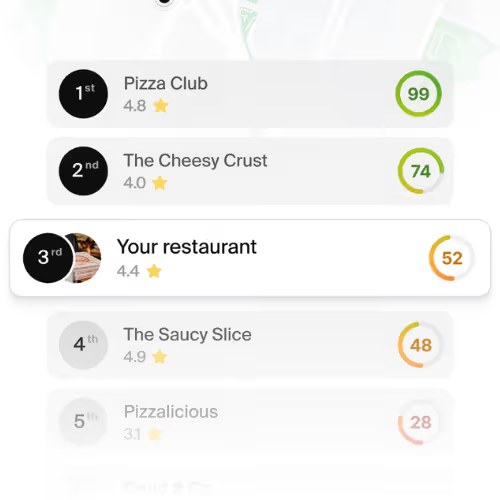
This matters because review volume and consistency affect how often you appear in local search results. Restaurants that regularly get new reviews tend to rank higher and get discovered more often. More visibility leads to more traffic, which in turn creates more opportunities to generate even more reviews.
Maximize conversions using paid ads
Paid ads only work when they lead to actual orders. I’ve seen restaurants spend money on ads that bring traffic but don’t convert because the landing experience or message isn’t clear.
The goal here isn’t more visibility, it’s turning high-intent searches and nearby attention into direct revenue. When you get the setup right, ads become one of the most predictable ways to drive orders.
Run Meta Ads to stay in front of nearby customers
Meta Ads work best when they keep a restaurant consistently in front of people who are actually close enough to order. The simplest setup is a 3–5-mile-radius geo-fence around the restaurant.
That way, the ads only reach people in the immediate area—the ones who can realistically walk in, pick up or order that night. No wasted spend on audiences that will never convert.
From there, the strategy stays simple. The strongest results usually come from straightforward ads: best-selling dishes, a limited-time offer or a clear reminder that the restaurant is open and nearby. This doesn’t need complicated creative or funnels.
Use Google Search Ads to capture high-intent orders
Google Search Ads work best when someone already knows they want food and is actively looking. These are searches like “best sushi near me” or “late night food.” I’ve seen restaurants get strong results here because you’re showing up at the exact moment someone is ready to decide. You’re not convincing them to eat, you’re just making sure they choose you.
The key is to focus on a small set of high-intent keywords tied to what you actually offer. Keep your ads simple, match them to your menu and send people to a page where they can order right away. If someone has to dig around after clicking, you lose them.
Turn website visitors into orders with retargeting
Most people won’t order on their first visit to your website. That’s normal. Retargeting ads let you stay in front of those people after they leave by showing them your food again as they scroll Instagram or browse other sites.
I’ve seen this work especially well for restaurants because food is visual. A strong photo of a dish they have already looked at is often enough to bring them back.
The setup is straightforward. You track visitors on your site and then show them ads featuring your best dishes, promotion offers or a simple reminder to order. This works because you’re not targeting strangers; you’re reaching people who already showed interest.
Increase online sales through menu engineering
Menu engineering is the process of using your sales and margin data to decide what items to promote, where to place them and how to present them so customers naturally choose more profitable options.
I’ve seen restaurants put a lot of effort into driving traffic, only to lose margin because their menus don’t steer people toward the right items. The way your menu is structured online directly affects what people order and how much they spend.
When you get this right, you don’t need more customers to grow revenue. You just need to guide existing customers toward better choices.
Get the free menu engineering spreadsheet and learn how to design your menu to maximize profits.
Show off your bestsellers
The first step is knowing what to push. I usually tell restaurants to look at their sales data and break items into two buckets. What sells the most, and what actually makes you money?
The goal is to find the overlap. Those are your bestsellers that also drive profit. If you don’t have clean data, even a simple review of your top orders and food costs will get you close enough to make better decisions.
Once you know your winners, your menu should guide people toward them without making them think too hard. Put those items at the top of each category, highlight them as “most popular,” and make sure they’re easy to spot on mobile.
Most customers won’t scroll your full menu. They’ll pick from what they see first. If your most profitable items show up first, you increase your average order value without changing anything else.

Use sensory language and descriptions
The way you describe the food matters more than most people think. I’ve seen restaurants increase order value simply by changing how menu items are written. A description like “chicken sandwich” doesn’t do much.
Instead, say something like “crispy buttermilk fried chicken with house-made pickles and spicy aioli on a toasted brioche bun.” It’s the same dish, but now the customer can actually picture it, and that’s what drives the order.
You don’t need to overdo it. Just focus on what makes the dish stand out. Talk about how it’s cooked, key ingredients or what makes it different. Words that tap into taste and texture help people imagine the experience before they order.
Simplify your digital marketing with Owner.com
At the end of the day, a digital marketing strategy for a restaurant works best when everything connects. Your website, ads, social and customer list should all work together to drive one thing—more direct orders. When you simplify the system, it becomes easier to manage and a lot more effective.
Owner.com brings all of this into one system, so you don’t have to stitch together five different tools. It handles your website, online ordering, customer data and marketing in one place, so everything actually works together instead of in silos.
Explore our case studies to see how our customers use Owner.com to turn their websites into direct-ordering engines and drive significant revenue growth.
{{cta-1}}