10 Benefits of Direct Online Ordering for Restaurants
See 10 benefits of online ordering for restaurants, from bigger tickets to fewer missed calls, plus the math on what it’s worth each month.
- Online ordering grows sales by catching orders the phone misses, increasing ticket sizes, and making it easier for guests to come back.
- Guests can spend more online, especially when the system suggests add-ons at the right moment in checkout.
- Conversion comes first. About 8% of visitors complete checkout on Owner websites, compared to about 4.5% on the average restaurant site.
- Most restaurants keep the delivery apps and add direct ordering alongside them, saving on commission for every order that moves over.
Online ordering does more than give guests another way to place an order. It impacts how much they spend, how long your team members spend on the phone during a Friday rush, and how many orders come in after you’ve closed for the night.
It also changes what you know about your customers. Every online order comes with contact details and an order history, which gives you a way to bring guests back on your own terms.
Below are 10 benefits of online ordering for restaurants, what each one looks like on a busy night, and the numbers behind them.
But first, let's talk about how direct online ordering helps grow your restaurant's sales and profit margins.
How Much Does Direct Online Ordering Actually Grow Restaurant Sales?
The advantages of setting up online ordering for your restaurant show up in a few ways:
- Guests can order when your phone line is busy or your doors are closed
- They tend to add more when they aren’t rushed
- Once they’ve ordered from you, they come back more easily
All of that depends on one thing first: whether the people who visit your website actually finish placing an order. It’s easy to overlook, especially for busy restaurant operators. A guest who gets stuck on a slow page or a confusing checkout doesn’t call to tell you; they’ll just visit a different site instead.
The checkout itself makes a big difference. On the average restaurant website, about 4.5% of visitors complete an order. On websites built with Owner, it’s about 8%, which works out to up to 80% better (with large chains left out of the comparison).
If 1,000 people visit your website in a month, a 4.5% conversion rate turns them into about 45 orders. At 8%, the same visitors place about 80. That’s 35 more orders a month from traffic you already have, and every one of them is a guest who can order again.
10 Benefits of Direct Online Ordering for Restaurants
Some of the benefits of an online ordering system show up on the first order. Others build over time, as guests come back and you learn more about who they are. Here’s how each one shows up.
1. Guests Spend More When They Order On Their Own Time
A fair question restaurant operators tend to have is: Do online orders have higher average tickets?
They can, and it comes down to how guests order. At the counter or on the phone, there’s always a little pressure to decide fast. Someone’s waiting behind them, or the person behind the counter is taking a phone order. Online, guests can take their time, look through the whole menu, and add what catches their eye.
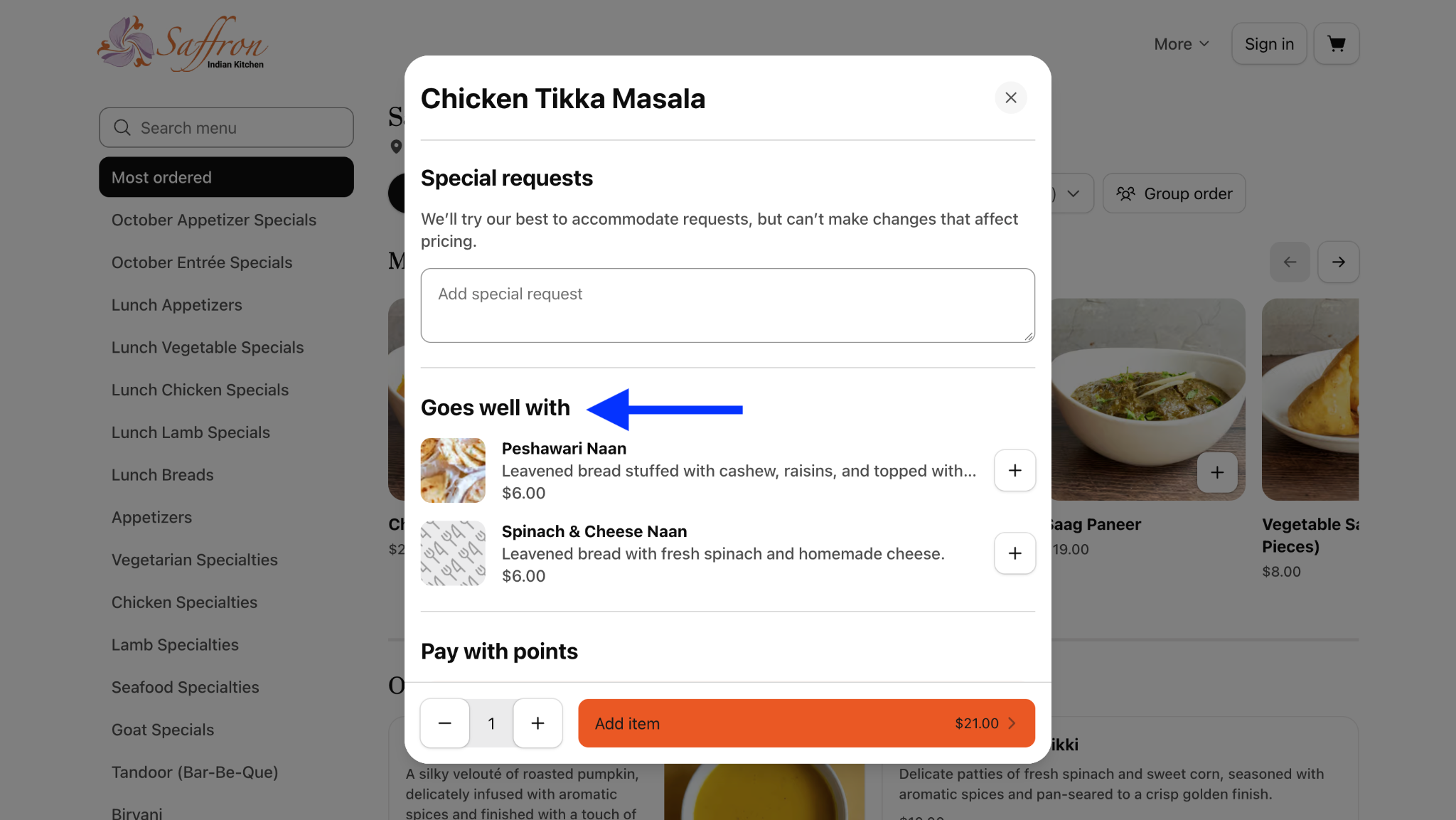
The bigger difference is the suggestion. A good ordering system offers a drink, a side, or an extra topping at the moment a guest is most likely to say yes, like right after they add an entrée to their cart. It’s what a great server does, except smart upsells happen on every order, even during a rush. At Saffron Indian Kitchen, the average check went from $45 to $55 after the restaurant moved its online ordering to Owner, where upsells are built into checkout.
2. You Accept Orders When Nobody Can Answer the Phone
A phone line only takes orders when someone’s there to pick up. Once you close for the night, the guest planning tomorrow’s lunch has to remember to call back, and a lot of them won’t. Online, they can place a scheduled order at 10 p.m. for pickup at noon, and it’s waiting in your queue when you open.
The same thing happens during a rush, just less visibly. When every person on your team is busy, the phone rings and goes unanswered. A lot of guests won’t leave a voicemail. Instead they’ll just order from somewhere else.
Online ordering keeps taking orders in both cases. Guests can order ahead for a set time, order right away when you’re slammed, or plan a weekend pickup days in advance, and none of it depends on one of your team members being free to answer.
3. Staff Stop Working the Phone During a Rush
On a busy Friday, the phone can take over one person’s entire shift. Every call means stopping what they’re doing, walking through the menu, repeating the order back and taking a card number, often while guests at the counter wait to be helped.
When more of those orders come in online instead of the phone, that person gets their shift back. They can run food, keep the counter moving, check on tables, or help the line catch up when tickets start stacking. Those are the things that keep a rush from turning into long waits and cold food.
It’s also easy to put a number on. Think about how many hours your team spends on the phone during your busiest nights, and what that time would be worth if it went to the guests already in front of them.
4. Guests Order the Way They Want To
On the phone, a guest has to know what they want before they call, remember to request add-ons or substitutes, and hope it all gets written down right. Online ordering removes that hesitation. They can scroll the full menu, read what’s in each dish, make changes, and pay before they ever leave the house.
That’s what a lot of guests are asking for. 58% of customers say they’d rather order delivery through a restaurant’s own website or app than a third-party one. The main reasons are convenience and the ability to customize their order.
Convenience is one of the biggest advantages of online ordering, and it also makes the next order easier. A guest who has your site saved or your restaurant app on their phone doesn’t have to look up the menu again as their last order is just a tap away.
5. Orders Reach the Kitchen Right the First Time
Phone orders pass through a lot of hands. When a guest says “no onions and dressing on the side” over a noisy dining room, the person on the other end writes down what they heard. But someone else in the kitchen has to read that handwriting, and every step is a chance for something to get missed.
When guests order online, they pick their own modifiers. Nobody has to hear them correctly or write them down, and the ticket shows up on the kitchen tablet exactly the way the guest entered it.
Getting this right has impacts beyond the meal. A wrong order means a remake, maybe a comped meal, and sometimes a one-star review that sits on your Google listing long after the mistake is fixed. Cutting out the step where orders get misheard prevents a lot of those before they start.
6. Catering and Group Orders Stop Being a Phone Call
The biggest orders a restaurant takes are often the hardest to take. A catering order for an office lunch means 30 sandwiches, a dozen substitutions, a pickup time, and a contact name, all read out over the phone and written down by hand. If the guest gets put on hold during a rush, there’s a good chance they hang up and call somewhere else.
Online, the guest builds the order themselves, item by item, and you get a full record of it. What they ordered, when they need it, and how to reach them is all in one place. Lead times and order minimums can be built right into an online catering checkout, so a 40-person order can’t come in for pickup in 20 minutes.
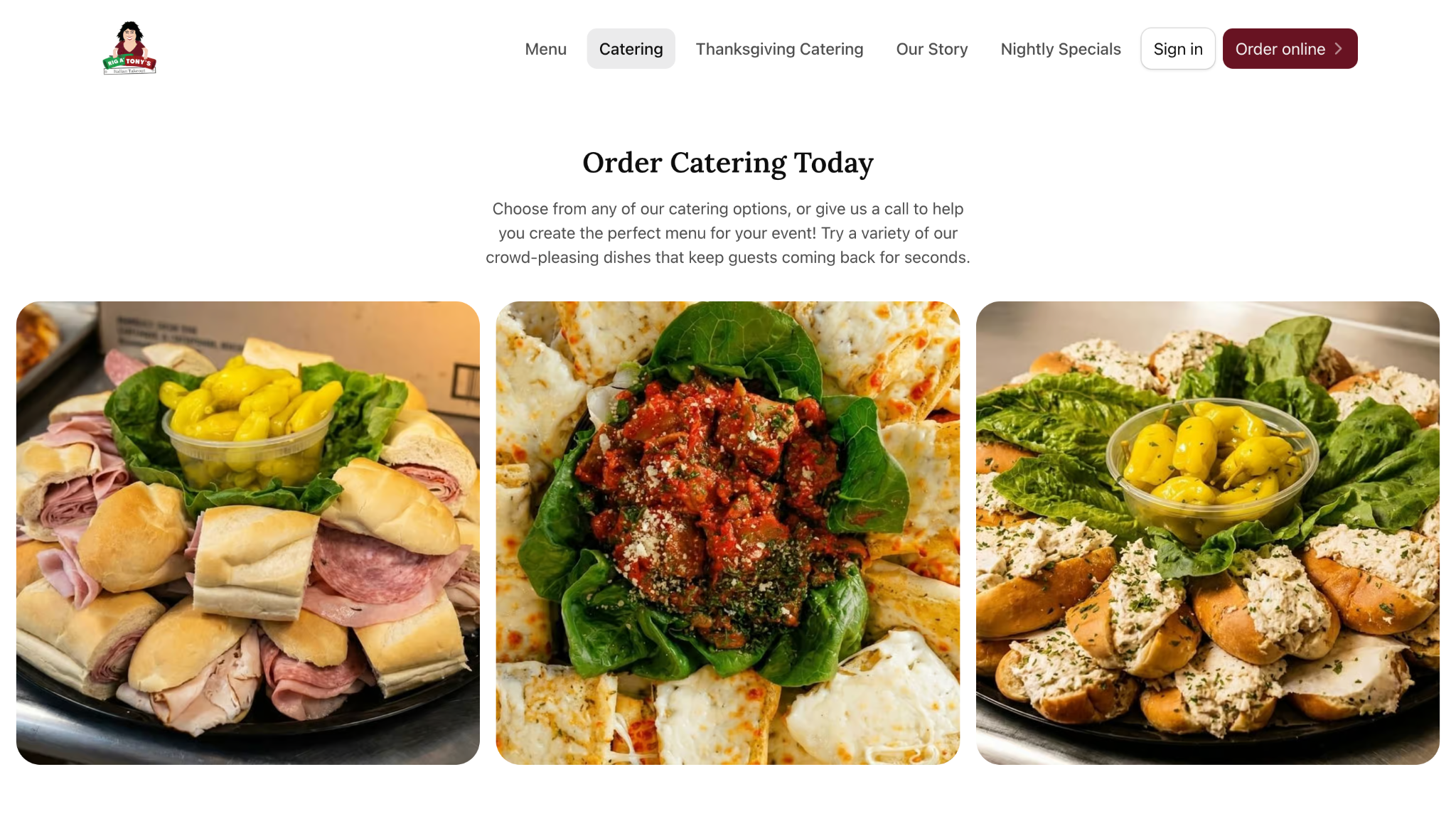
Those orders add up. At Rig A’ Tony’s Italian Takeout, the average online catering order is $250, and catering sales grew 20% after the restaurant moved its online ordering to Owner.
7. Every Order Lands in One System
A lot of restaurants have a counter that can resemble an electronics store: one tablet for each delivery app, another for the website, and the POS for everything else. Each one pings on its own, each has its own menu to update, and someone has to watch all of them at once. When an order gets missed, it’s usually because it came in on the tablet nobody had eyes on.
A major advantage of an online ordering system is that every order lands in the same place. When you use a system with POS integrations, orders from your website, the counter, and third-party marketplaces all show up in one queue. Delivery orders can come in the same way. You update the menu once and it’s right everywhere.
Take Gyro Concept, for example. The team was juggling several tablets and systems before switching to Owner, and missed orders were part of the routine. Once everything ran through one setup, direct orders grew by 100%.
8. You Find Out Who Your Customers Actually Are
A phone order or a walk-in sale usually ends with the guest walking out the door without any indication that they’ll be back. You know someone ordered a large pepperoni on Tuesday, but you don’t have details about who they were, how often they come in, or how to reach them again.
An online order can come with a name, a phone number, and an order history. These small details can make the difference between a one-time sale and a recurring customer.
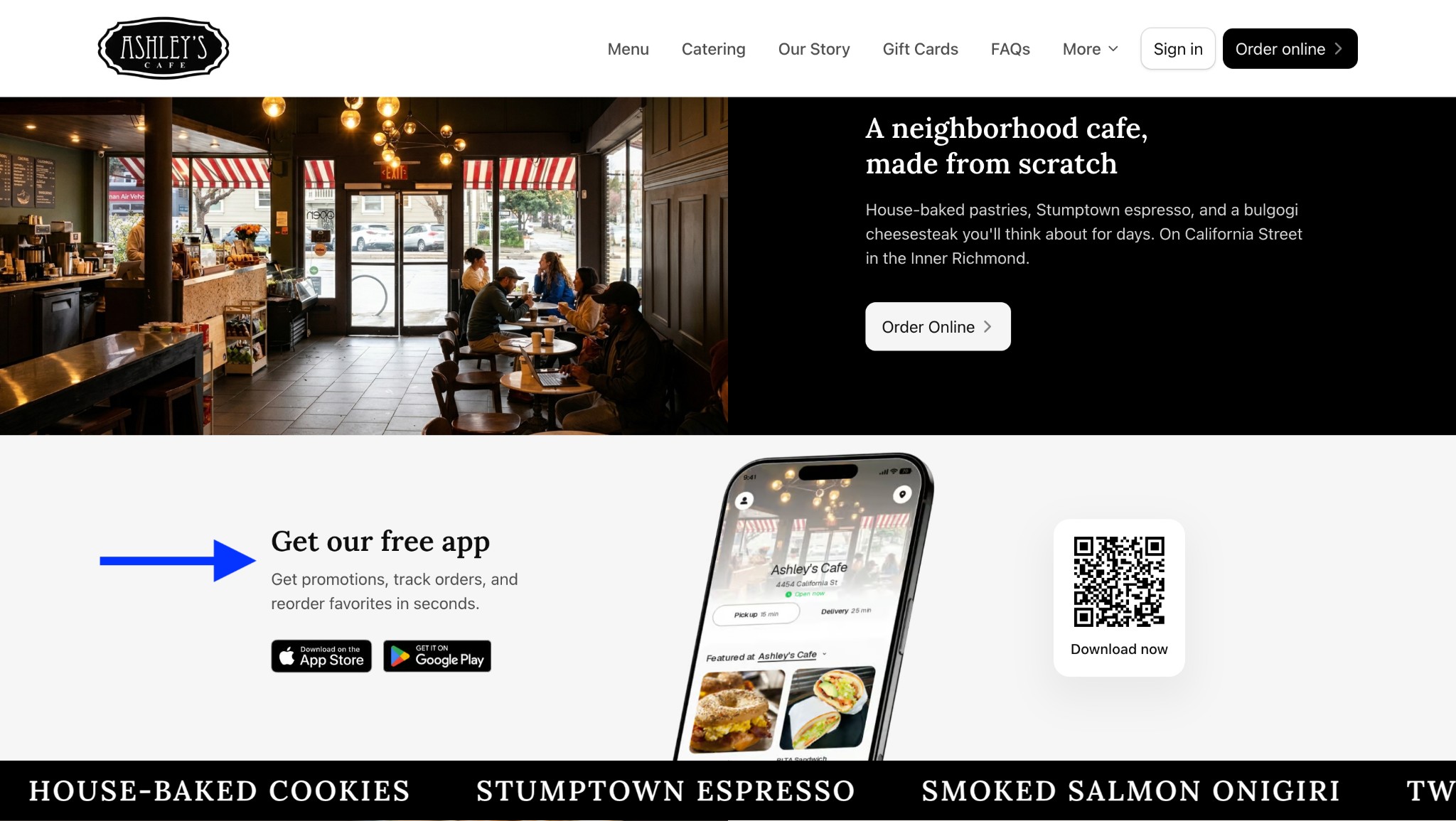
Guests need a reason to share that information, and the best one is something they get in return. When a loyalty program shows points climbing as items go into the cart, signing up feels like part of ordering instead of an extra step. It works in person, too. About half of guests enter their phone number at checkout on Owner’s POS, and at Ashley’s Cafe, that number is 65%.
9. You Can Bring Customers Back at the Right Moments
A customer list is only worth what you do with it. Plenty of restaurants collect phone numbers and emails, then never send anything. Or they send the same discount to everyone a few times a year.
The restaurants that get the most out of their customer list reach guests at the right moment. This could look like:
- A text to someone who hasn’t ordered in a month
- A push notification about tonight’s special to people who typically order on Fridays
- A reward reminder when a guest is a few points away from free food
When marketing campaigns and push notifications run automatically off your list, those messages go out without anyone on your team having to write or schedule them.
Your own app makes the biggest difference. Guests who order through a restaurant’s app on Owner reorder about 2.3x more in their first 30 days and place about 2.6x more orders over time than guests who only order on the website. At Ashley’s Cafe, loyalty sign-ups tripled, giving the restaurant more guests to bring back.
10. The Customer Relationship Belongs to You
When a guest orders through a delivery app, that platform keeps the relationship. You make the food, but the app has the guest’s contact information, decides what promotions they see, and sets the terms you work under. If those terms change, like a higher commission rate or new fees, your only choice is to accept them or lose access to those guests.
Orders through your own website and app work differently. The guest’s name, contact information and order history stay with you, and reaching them doesn’t depend on someone else’s terms. Over time, that list can become as valuable as your recipes or your location. Online ordering is how you build it, one order at a time.
It also keeps more of each sale in your pocket. Restaurants on Owner save about $1,350 a month in commissions on average by moving orders from third-party apps to their own channel.
None of this means dropping the delivery apps. It means that when a guest is ready to order from you directly, there’s a place for them to do it, and the relationship that comes with it is yours.
What Direct Online Ordering Is Worth for a Restaurant Your Size
So, is online ordering worth it for restaurants? Here’s what a few of these benefits can look like in dollars. This is an illustration, not a forecast. Your numbers will be different, so swap in your own to see what it means for your restaurant.
Some assumptions for this example:
- 100 online orders a week, at a $30 average ticket
- Upsells add $2 to the average online order
- 5 orders a week come in online that would have been missed on the phone (after hours or during a rush)
- 6 staff hours a week move off the phone, at $15 an hour
- 2 wrong orders a week are avoided, at $12 in food cost each
- 40 of the weekly orders move from delivery apps to your own channel
- Months are calculated at 4.33 weeks
A few things to note about this example. It doesn’t count repeat orders from loyalty and your app, which build over months, or catering, which varies too much from one restaurant to the next. It also treats staff time as time your team can put toward guests in the room, not as hours cut from the schedule.
Even without those, the example comes out to about $3,300 a month. And that’s before repeat orders, which is where the benefits of online ordering really start to show up.
What Direct Online Ordering Won’t Fix For Your Restaurant
Online ordering does a lot, but it isn’t a fix for everything. Knowing where it stops helps you set the right expectations, and figure out what to work on alongside it. None of these are reasons to skip online ordering, but they do shape how much you get out of it.
- It won’t create demand on its own. Online ordering makes it easier for people who already want your food to order it. If not enough people know about you or want what you serve, an order button doesn’t change that.
- It won’t fix a slow kitchen or a thin menu. More orders put more pressure on the line. If tickets already run long on a busy night, online orders will only make that more obvious. The same goes for a menu that doesn’t give guests much reason to come back.
- It won’t work if nobody knows the ordering page exists. Guests need to be able to find it first. That means a link on your Google listing, a clear order button on your website, and a site that shows up when people nearby are looking for a place to eat. Restaurant SEO is a big part of that.
- It won’t replace delivery app volume overnight. Guests who’ve ordered from you through an app for years won’t all switch the day your own ordering goes live. Direct orders grow as guests find your site, try it once, and have a reason to come back. Most restaurants keep both running while their direct business grows.
How Owner Turns Direct Online Orders Into Repeat Customers
With online ordering, every order is a chance to turn a guest into a regular. Owner gives independent restaurants the same tools the big chains use to do it.
- Smart Upsells raise the value of each ticket, suggesting the right add-on at the right point in checkout.
- Loyalty & Rewards gives guests a reason to share their name and number, whether they order online or at the counter through Owner POS.
- Your branded app, marketing campaigns and push notifications then bring those guests back, automatically.
Everything runs from one menu and a single customer list across in-store, online and delivery orders, so you’re not switching between tablets or piecing together who your regulars are. And it starts with a restaurant website built to get found on Google, so more of the guests searching nearby end up ordering from you directly.
If you’re ready to see what online ordering could be worth for your restaurant, get a free demo and we’ll show you how it works.