Restaurant SEO Services: What They Cost and What You Actually Get
I’ll cut through the confusing sales pitches for restaurant SEO services and show you what work is actually involved, so you can feel confident about what you’re investing in to make your restaurant the top choice in local searches.

- Most restaurant SEO services are divided into your website, your listings, and your reviews. The main SEO services cover Google Business Profile management, review generation, listings, website and menu fixes, location pages, content, keyword research, reporting, and AI search visibility.
- Know which SEO work is one-time versus an ongoing effort. Setting up your profile, aligning your listings and optimizing them, fixing your website, and publishing location pages are mostly one-time projects. However, generating reviews, posting content, and reporting on it are ongoing.
- Costs vary widely. Local SEO agencies can cost you thousands of dollars a month. Freelancers can cost hundreds to low thousands, depending on the service. And restaurant platforms can cost hundreds.
- Start with the SEO fundamentals before you’re sold on technical work. Before you do anything, make sure you have a working website, a Google Business Profile that matches it, online ordering, and a way to get steady reviews. That will get your restaurants far.
- To know if your SEO work is paying off, these metrics should improve. As traffic from search engines grows, keep track of calls, direction requests, website clicks, map pack rankings, and direct orders. Expect results in 30–60 days, not days.
You’ve probably got a lot of junk mail and spam calls from people promising to help you show up more online. You don’t know who they are, and you certainly don’t trust them.
SEO services for restaurants are rife with these kinds of suspicious sales tactics. Why? It’s because SEO is critical to restaurants. But most owners don’t have time to learn all the technical ins and outs of SEO for their restaurant. So people offer to take it off your plate. For a price, of course.
Most restaurant SEO services include a mix of updating your website and third-party listings, like your Google Business Profile, plus help getting reviews. Agencies can offer these services with teams that handle the work. Individuals, acting as consultants or freelancers, can also take this work off your plate. Many software platforms also help you manage different parts of your restaurant’s SEO yourself. Some even do it for you, like Owner’s restaurant SEO system. Some of this work is straightforward, but tedious. Other parts are technical and therefore confusing.
In this guide, I’ll cut through the confusing sales pitches and information about restaurant SEO for you. I want to clearly explain what restaurant SEO means for your restaurant, what it entails, and what it can cost you.
You don’t need to be an SEO expert, but you need to know enough so you can’t be taken advantage of. This guide will help you.
Let’s dive in.
What Restaurant SEO Services Actually Include
Restaurant SEO services include managing your website, your third-party listings (primarily your Google Business Profile), and your reviews. Services start with giving you an assessment of your current online presence. An audit shows what’s working and where you can improve. With this information, the services then execute a prioritized list of activities that’ll help your restaurant show up more online. Each service will send you reports to show progress.
There are nine key areas of restaurant SEO services. I’ll explain what each is and what a good service actually looks like. I’ll also tell you when it’s a one-time project or something ongoing you’ll have to invest in.
This will help you understand what you’re considering paying for and decide if you actually want to do it yourself.
1. Google Business Profile management
Google Business Profile management is when an SEO firm updates and optimizes your profile to help you show up in more relevant Google searches and in Google Maps when people search for restaurants near them. They optimize essential elements like your photos, menu, hours of operation, links to your website or online platform, phone number, and address. They may also offer to help you solicit positive reviews from your customers.
Any SEO agency specializing in restaurants will offer Google Business Profile management. That’s because a Google Business Profile is what customers see when they search online for restaurants. For instance, optimized Google Business Profiles are what you see when you ask for “Italian restaurants in San Antonio”.
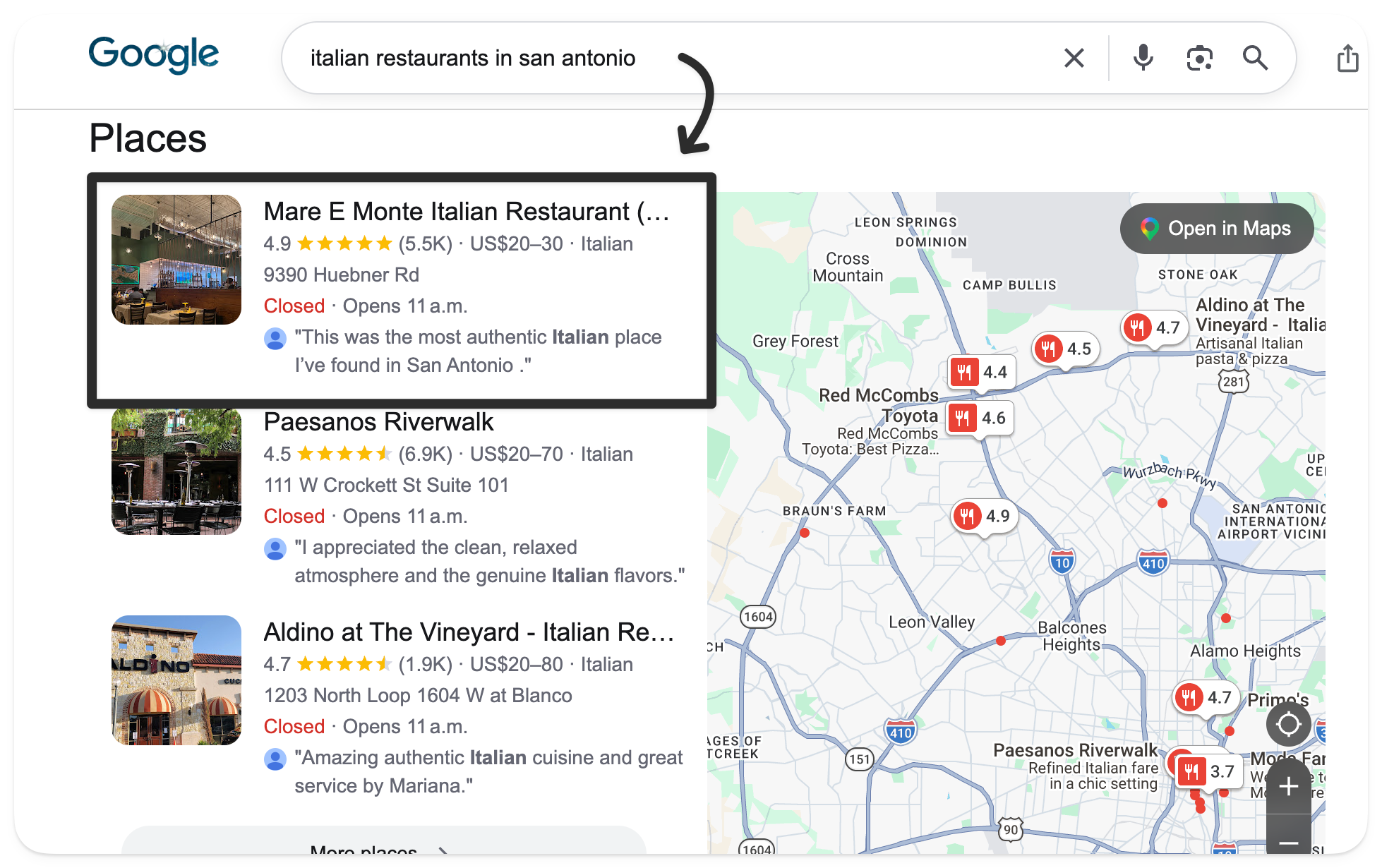
Because you likely already have a Google Business Profile, an agency or consultant will audit what’s there. They’ll catch any issues with your name, address, and phone (NAP) details and make sure they’re up to date.
After that, they may offer to help you set up a process to collect and respond to reviews and post updates to your profile. That’s because a Business Profile isn’t a set-it-and-forget-it listing. It’s arguably the most important listing you have because most people search on Google.
If you’re talking to a restaurant SEO agency or expert, the main goal should be to drive direct traffic to your website or reservation platform. They shouldn’t be promising instant results. Optimizing your Business Profile can take 30–60 days to materialize as an uptick in traffic from your profile.
When choosing a firm, look for one with a clearly defined list of what Google Business Profile management includes, and what they consider a one-time project versus ongoing management. You don’t need to pay someone hundreds of dollars a month to keep your address and phone number up to date.
But you might consider a monthly payment if they’re driving consistent reviews and responding to all of them, and if that leads to your restaurant being the highest-rated in your area.
2. Review generation
SEO service agencies or consultancies specializing in restaurants will also offer systems to consistently generate positive reviews.
They’ll set up tools to automate text messages or send emails after someone schedules an online reservation or places an order. These tools engage customers so happy ones leave reviews on your Google Business Profile. They can also create (or recommend you print) physical QR code signs. You can place these around your restaurant to prompt customers to leave a review.
We all know how important the 5 stars are for our Google Business Profiles. It’s what shows up on the maps when you’re looking at restaurants. And so many people make a snap decision based on that. “Less than 4.5? Pass!”
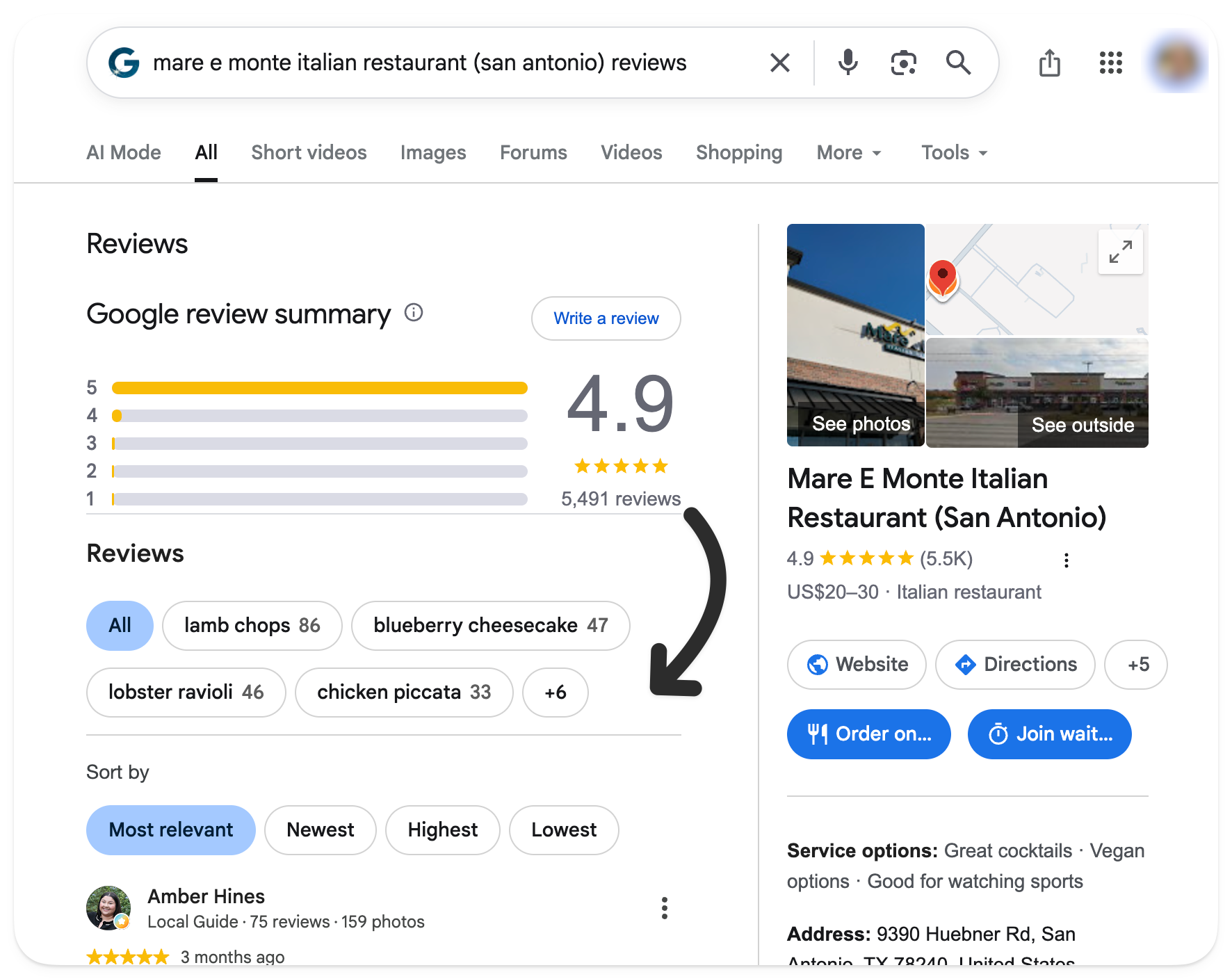
If you’ve ever hustled for positive reviews, you know how tempting it is to pay someone to take care of it. These firms offer to manage all your review sites, responding to reviews and helping you get more.
If you want to pay a firm to handle this for you, keep in mind that it is an ongoing engagement. Reviews decay over time, and customers generally trust more recent reviews. Likewise, review platforms' algorithms take into account the ongoing flow of reviews you get. They have a term for it: review velocity. They know people will try to game the algorithm by generating a ton of positive reviews in one big push. It spikes and drops back down. There’s no velocity, which makes it suspicious. All that to say, you need to continually generate reviews over time.
If you do decide to work with a firm to get your review management underway, look for one that promises the services I mentioned above, plus regular reports explaining what they’re delivering for your investment. A really good firm will also help you understand the sentiment of the feedback. This will help you see what customers like or don’t like.
3. Listing management
Listing management is when an agency makes sure that your business details are consistent. They handle the tedious work of aligning all the main directories and apps where customers and AI search engines can find you. The core details to keep consistent are your name, address, and phone number (NAP). They’ll also keep your holiday hours updated and flag incorrect profiles or duplicates.
It’s similar to managing a Google Business Profile, but more expansive. It includes updating Yelp, Tripadvisor, DoorDash, Uber Eats, OpenTable, local chamber of commerce directories, and more. This is a lot of manual work, so hiring a firm to ensure your bases are covered can be worthwhile.
A good firm will align your listings. But a really good firm will proactively go into each platform and make sure that the right attributes are applied to your restaurant. Each one is slightly different and has different optimizations to make. Some may have attributes, which are like tags you add to your restaurant. They provide more details if you have outdoor seating, Wi-Fi, delivery, or pickup. Things like that.
You can work with a firm to do a one-time cleanup across all of your listing platforms, so you know it’s covered. Many firms also offer ongoing monitoring and optimization. There are so many platforms to keep on top of; sometimes it helps to outsource. But if you ask me, I’d only pay to clean up all listings in one sprint of work. Then, I’d make a quarterly reminder to click through each listing and make any spot changes. It’s not worth paying a monthly retainer to do that.
4. Website and menu optimization
A core part of any SEO service for your restaurant is auditing your website. Beyond the visuals, an SEO service will check the structure of your site, making sure that search engines, like Google or ChatGPT, can find what they need.
There are hidden details, called schema markup, that categorize details about your website in a structured way. These details aren’t for humans but for search engines to read. They use that data to present you accurately in search results and in their maps. If the details aren’t present or are wrong, that’s how you start seeing incorrect details popping up online.
In addition, menu optimization is important. This is the process of taking what might be just a PDF or image on your website and expanding it out into proper web pages. They’ll rewrite descriptions to include relevant keywords. You might go from having one page with your menu items listed to a landing page for each dish or special deal. All this helps you secure “dish snippets” in search results, which show up as “This restaurant has [dish name] according to their website and reviews.”
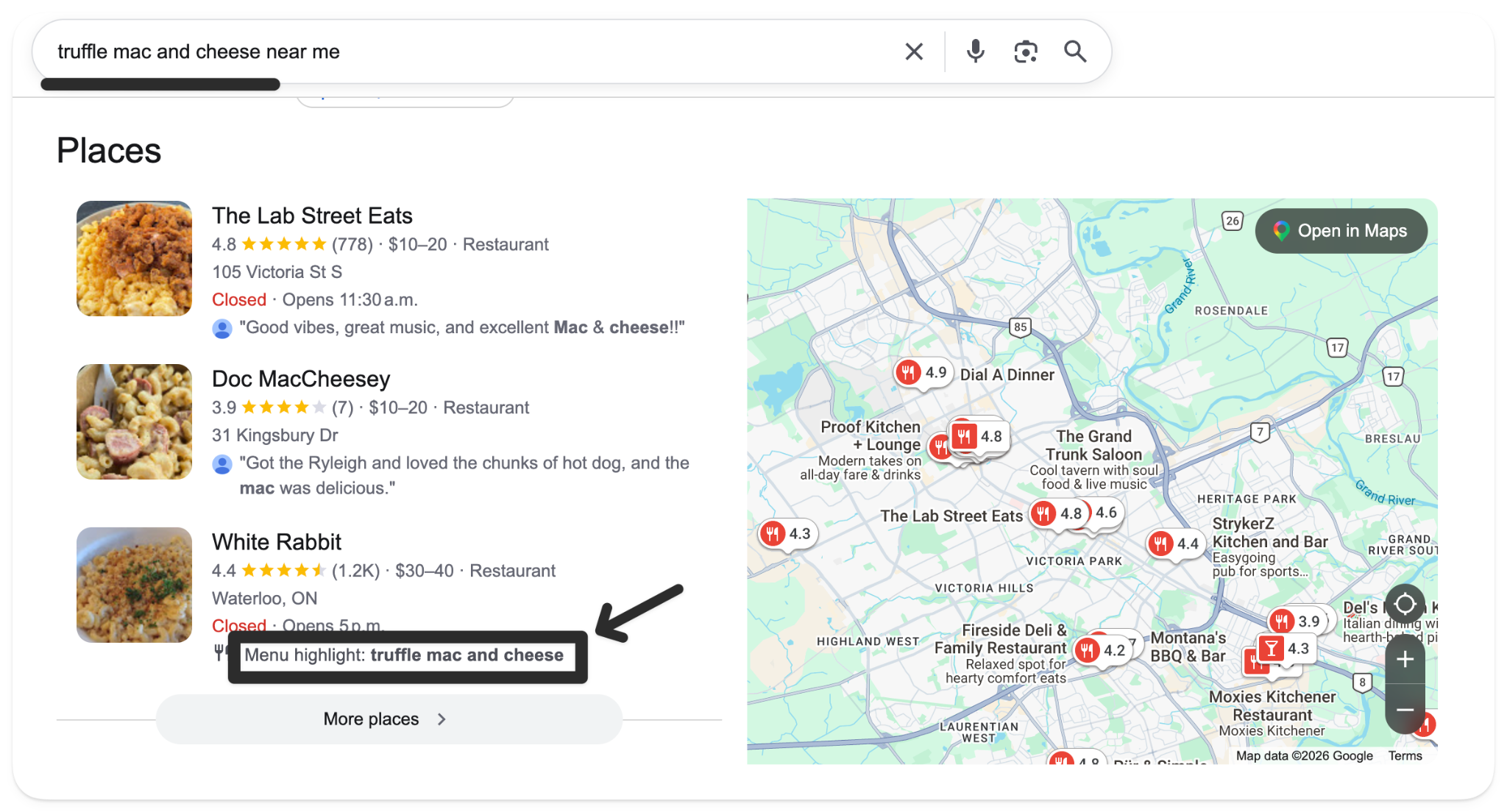
A great firm will go into the technical weeds on your behalf, showing you how these small details make a big difference in how you show up online. Because website optimization isn’t so much about making your website look nice, but about helping your restaurant get found in search engines.
This can be a lot of work and somewhat technical. But I would consider it a one-time project unless you plan to update your website regularly. A retainer may come in handy if you are opening new locations or promoting a new menu, like moving from just burgers to pizza too, and you want Google to include that in its search results.
5. Location pages
Location pages are individual web pages for each restaurant branch you have. In my case, I have eight different locations for Mattenga’s Pizzeria.
I don’t just have one page that lists my locations; I also have individual landing pages for each branch, like my Northeast San Antonio location. The main page listing all locations is at the top of my website, so customers can easily find the closest location. But the individual location pages help me show up when people search for "the best pizza in Northeast San Antonio.”
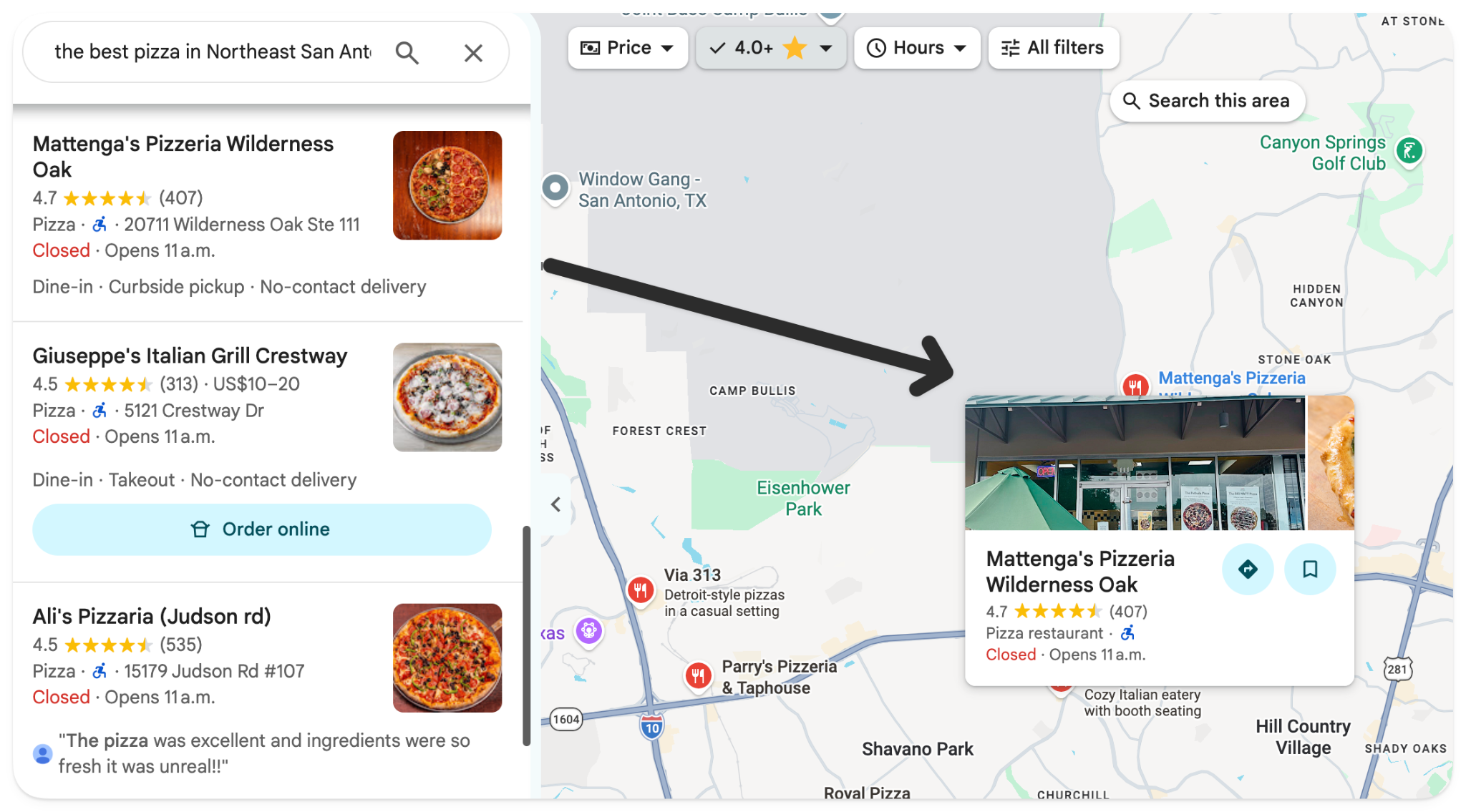
For what it’s worth, I didn’t come up with this on my own. I manage my restaurant on Owner. Their platform uses AI to create these pages for relevant, high-volume, high-intent food searches, so more customers find my nearest restaurant.
If your website isn’t built on Owner, an SEO services firm will set up these landing pages correctly, with the right details. They should be optimized for searches customers make, like "Best Italian Restaurant in [Neighborhood/City Name]".
A great firm will make sure that the landing pages have unique copy, keyword-rich descriptions, and images with links to your ordering or reservation platforms.
It’s a big upfront push to make these pages, especially if you have multiple locations, but once it’s done, you can handle the ongoing smaller website updates. If you understand the platform your website is built on, you shouldn’t have to pay someone a monthly retainer for it.
6. Content production
Content production is when an SEO services firm writes content for your restaurant that is specifically geared to help you show up better in search engines, like Google or ChatGPT. This content includes blog posts on your website that capture keywords like “Best tacos in San Juan” or “Chic patio bar in downtown New York.” These articles mirror the searches potential customers make.
Content production may also include social media content for Facebook, Instagram, TikTok, and other platforms where your customers spend their time.
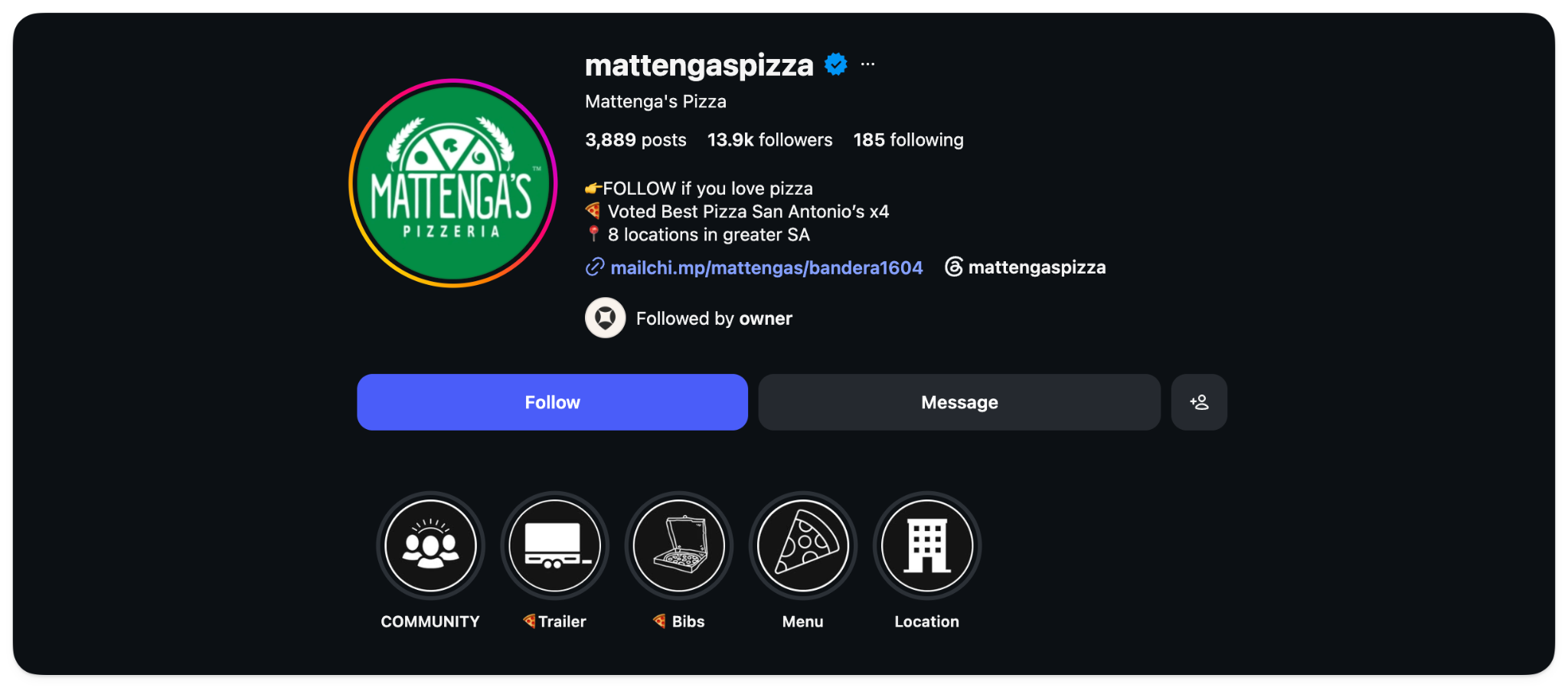
Likewise, if they manage your Google Business Profile, they’ll generate updates and posts that live on your profile. Posts help potential customers see what’s new, promotions, or menu updates. Adding posts also shows that you’re an active restaurant online.
Creating content for your restaurant is ongoing work. A good firm will provide research on what topics are searched for the most online or what’s trending on social media. This brings us to the next section.
7. Keyword research
Keyword research for your restaurant is the process of finding online topics relevant to your restaurant to create content about. They’ll use various advertising tools and search engines to find frequently searched terms. They’ll then map out a plan for how you can capture some of that search volume so it comes to your site.
For example, I know that people search for “the best pizza places in San Antonio.” There are a lot to choose from. So if I can create (or encourage others to create) content online that says Mattenga’s is the best place for pizza, I have a chance of showing up in search results when someone asks Google or ChatGPT for a recommendation.
You can check estimated search volume online for various terms using keyword research tools like Semrush, or free ones like Google Trends for broader topics.
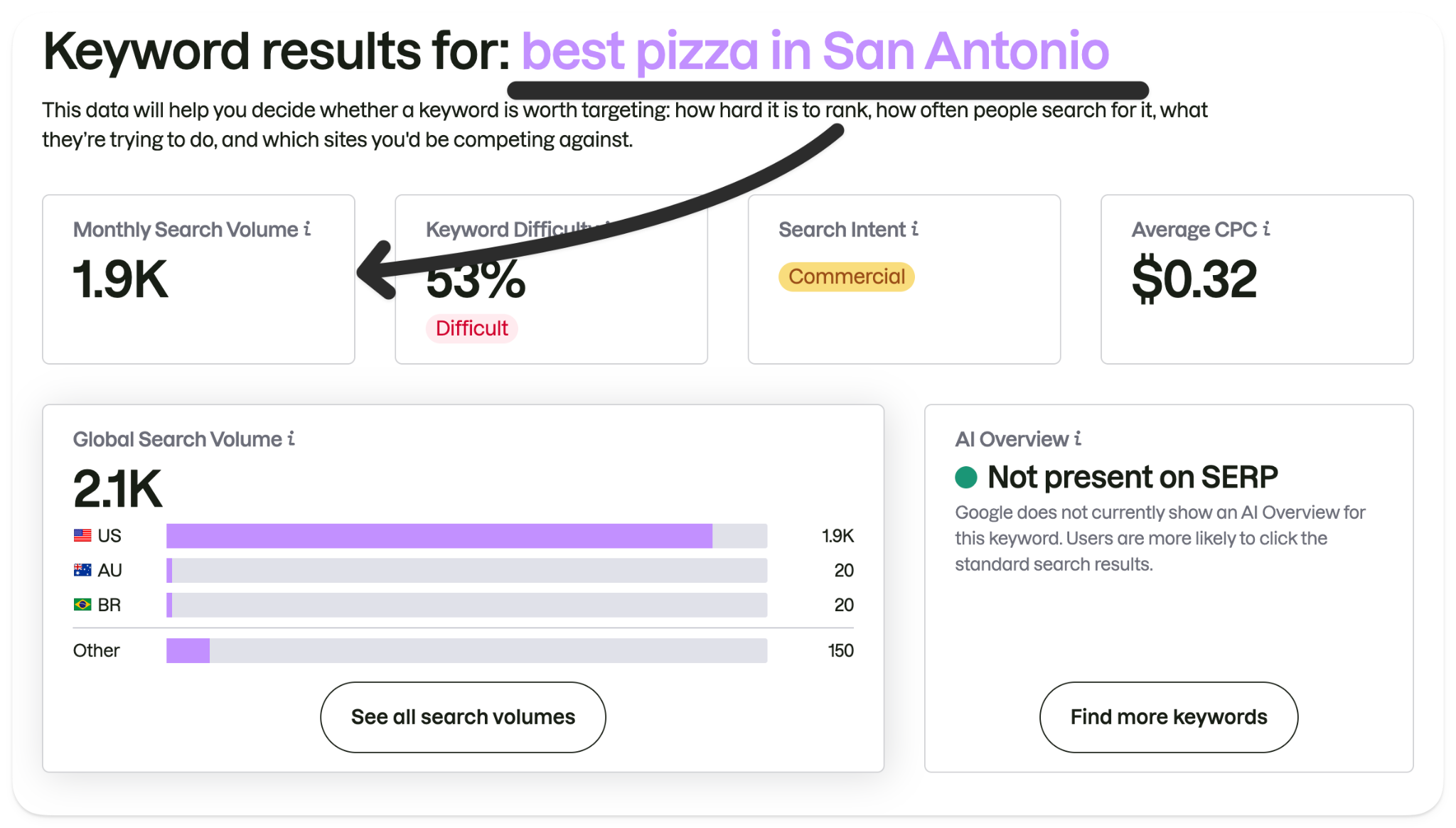
You can hire an SEO agency for your restaurant to do a round of keyword research, so you have a roadmap for the topics that matter. It can be a one-time project.
If you are building out a content strategy around these topics, that may require ongoing work from them on a monthly basis to find out what’s trending.
But to start, if you’ve never done this before, I would get a batch done. So you have a list of the top thirty to fifty topics your restaurant should be creating content about.
8. SEO Reporting
A good SEO agency will provide helpful reports that show how your restaurant shows up online. You should be getting regular reports like these that go deeper than just saying, “Everything looks good. You had this much traffic last month and this much this month…” Those kinds of updates aren’t actionable.
Instead, they should be saying, “We know that one of your priorities is driving more traffic to your online ordering platform, so we’ve added a link to it on each one of your listings. Most of the traffic right now is coming from your Google Business Profile, so we’re going to double down on that by…”
You can see the difference between these kinds of reports. One just states facts, and the other outlines an action plan based on your stated goals.
The reports should break down how your traffic is changing over time. They should specify where it’s coming from, which searches bring the most people, and any opportunities to capture new search terms. If anything on your website is broken, they should flag it and give you instructions on how to fix it, unless they fix it themselves.
A good firm won’t send you a dozen pages of hard-to-read information. Instead, it will take into account your goals, like growing traffic from Google or driving more direct orders. They’ll show how SEO work drives towards those goals.
This work is ongoing. But you have to stay engaged with the reports so the agency stays accountable. I can’t tell you how many restaurants are paying someone every month just for an email update on how their website is doing. Don’t waste your SEO investment in this way.
9. AI search visibility
More and more people are searching on ChatGPT and other AI search engines. They often use it to get information about which restaurant they should eat at. You can do a lot to optimize your restaurant’s website for ChatGPT.
However, I have good news for you. Much of the SEO work you’re already doing for your restaurant helps you show up in ChatGPT, too. So don’t think you have to invest in a whole new set of services just for ChatGPT. Google’s search engine and ChatGPT differ, but the differences are marginal for your restaurant.
So, as a fellow restaurant owner, I’m giving you permission not to worry about this if you’ve already been investing in the work outlined in this article.
Now it’s time to talk about money. Investing in your restaurant’s SEO is a long game and can be expensive. Let’s look at how expensive.
The Five Ways to Get Restaurant SEO Work Done
When it comes to investing in your restaurant’s SEO, there are five paths before you:
- Do it yourself because you know exactly what results you want and feel confident you can get there with your current knowledge and time.
- Hire a freelancer from your network or websites like Fiverr or Upwork to execute on the plan you have in mind, knowing that you’ll have to manage them closely like an employee.
- Outsource SEO work to an agency that brings technical expertise and capacity to get you to your goals faster, but at a higher cost and level of trust in their process.
- Hire an employee in-house to focus on your restaurant’s SEO because you’re already seeing results and want to double down with someone you can work closely with one-on-one.
- Subscribe to software that gives you tools and data to optimize your restaurant’s online presence from one platform.
To decide which one is right for you, I’ve put together this table that outlines the time you need to invest, what you should expect to get, and who it’s best for.
I hope this helps as a benchmark.
In addition to the table, let me give you some advice.
If you want to be confident you have all your SEO boxes checked, build your restaurant website on Owner.
And don’t gloss over this. I have reason to make this recommendation.
I manage Mattenga’s Pizzeria on Owner and my sales grew by $192k in my first month. So I’ve become a huge proponent of Owner. I’m not against experts who own agencies, but Owner helps thousands of restaurants and they’ve built a platform with a lot of the expertise baked in. So I don’t need an agency or freelancer.
Owner’s websites are designed with restaurant SEO in mind, getting you more traffic from Google and turning those visitors into direct online orders. They also integrate with your listings, so your NAP details are consistent everywhere.
Having all your SEO services baked into a platform that adapts to best practices as they change over time will reduce how many plates you have to balance. You’re covered.
Now, if you are committed to managing this yourself with the help of freelancers and agencies, here’s what you can do.
Start by doing the work yourself so you have an idea of what good looks like and some ‘expert’ can’t pull the wool over your eyes.
After that, consider bringing on one person, a freelancer, who can augment what you’re already doing. But choosing a freelancer is laborious.
So my recommendation is to hire two or three freelancers from a website like Upwork or Fiverr after vetting their previous work. Give them a small test project. The projects can ask for an audit of your home page or your Google Business Profile. Ask them how they’d optimize it for more organic search. This way you can weed out people who are not a good fit quickly without investing too much.
Then you can gradually scale up the level of work, knowing that you’ll have to give them instructions and review their work, not wholly outsource all SEO work to them.
In short, hire a freelancer for limited-scope projects you know how to complete yourself but don’t necessarily have time for.
If you’re a restaurant owner with multiple locations, you may be at a scale where an agency can help you standardize SEO across locations. Your engagement will include a recurring monthly report on their progress toward the milestones you set together. Set clear goals together, like growing traffic from Google or driving more direct orders, so you can hold them accountable.
Like with a freelancer, I’d start with a small project to vet the agency’s quality and trustworthiness. After that, you can trust them with ongoing work we outlined above.
How Much Do Restaurant SEO Services Cost?
How much restaurant SEO costs can vary a lot, but I’ve done some digging to help surface some helpful averages to serve as benchmarks.
I compiled prices of 36 local SEO agencies across the US, over 30 Fiverr freelance postings, Upwork rate data from their SEO experts listing, 15 software vendor pricing pages, and federal wage data. I also used research compiled by other publications on SEO providers.
To make it easy to compare apples-to-apples, I’ve summarized my findings into a monthly cost for one location and reported the median.
Comparing the pricing of each way to get SEO done
The table below compares the different options for completing this work:
The above monthly costs should help you compare against any quotes or pricing you get when you explore restaurant SEO for yourself.
Comparing what each service costs on its own
I’ve also compared what each restaurant SEO service can cost based on the listings I reviewed.
Use these rough benchmarks to compare if a potential partner you’re speaking to is over or under these results.
Is Restaurant SEO Worth The Investment?
It’s non-negotiable that you should optimize your restaurant’s online presence. Most customers will find you online. But I can’t tell you exactly what you should invest in first and how much to set aside. The answer will be different for everyone.
But I can tell you how to calculate the level of investment you should contribute.
Start by pulling these numbers from your business:
- Your monthly orders across your different services (dine-in vs. takeout)
- The average each order usually amounts to
- The amount of each order paid in marketplace commissions (for example, what DoorDash, Uber Eats, or Grubhub take from each order)
- The number of actions on your Google Business Profile in the last 90 days (this includes calls, direction requests, and website clicks. You’ll find them under Performance in your profile.)
Now, how many people who come to your website end up placing an order, either online or dining in person? For simplicity’s sake, let’s say that 1 in every 4 people who visit your Google Business Profile end up coming in and ordering. That’s a 25% conversion rate from your Google Business Profile to ordering. Not bad at all!
Now, if your average order value is $35, you know how much revenue you’ll generate from your Google Business Profile listing. So, based on that math, if 100 people interact with your Google Business Profile, that’ll turn into 25 people making an order, which equates to $875 in revenue (25 people x $35 average order size).
You don’t get to keep $875. Take off the rough labor costs per order and the marketplace commissions to get your net.
Now you can have a conversation about how much your restaurant SEO investment will cost and what it needs to pay back to be worth it to you. Put simply, how many extra orders do you need to break even?
Break-even orders per month = monthly fee ÷ (average ticket × margin)
How to Tell If Your Restaurant SEO Is Working
- Numbers to watch: calls, direction requests, and website clicks from your Google Business Profile, your position in the Google Maps pack for your main search terms, and direct online orders.
- Numbers to ignore: vanity metrics like social followers, raw page views, or rankings for keywords nobody searches. They look good in a report but don’t tell you whether you’re getting more orders.
You’ll start to know if your restaurant SEO investment is working if you see a general rise in traffic and impressions on your website along with interactions on your listings.
The biggest word of advice I can give you is that you’re not going to see immediate results in your first two weeks of investing in your restaurant’s SEO. Every change you make will take at least a few days for Google to notice it. It needs to recrawl your profile or website, and that takes time.
While you wait for changes to take effect, look for a few indicators. For starters, look at the data your Google Business Profile provides. After updating your Business Profile or website, see if your phone calls, direction requests, and website clicks increase. This means whatever you’re doing is leading to more visibility for your restaurant through your Google Business Profile. Of course, you want orders to jump, but these data points will come first.
If you build your restaurant’s website on Owner and manage your listings on the platform, you can expect to start seeing Google rankings improve within 30 to 60 days. That’s what most customers experience. And these results grow over time. Owner covers the fundamentals we’ve talked about in this guide, but also keeps optimizing your site and listings. So the traffic from SEO will jump within two months and then steadily grow.
Restaurant owners also report seeing about 25% more SEO traffic in the first 60 days.
How Owner Handles Restaurant SEO
If you’re serious about your restaurant’s SEO and online presence, but you’re not an SEO expert, then building your restaurant on Owner is the best way to make sure you have all the bases covered. When you sign up for Owner, you build your restaurant website through their platform.
Township Line Pizza in Pennsylvania saw that when you Googled their name, they were buried below a dozen other online ordering platforms. The Owner team built their new website, and now they’re where they belong, above all the online ordering platforms.
They have a proven website approach that’s based on 90+ SEO factors. The website structure is rigid, but that’s on purpose. It’s designed to increase your online visibility and drive repeat orders.
Your website, listings, and menu are optimized together, so information stays consistent, which is critical for good SEO. Using their platform’s AI, it creates pages for relevant, high-volume, high-intent food searches, so more customers find your restaurant.
Likewise, Owner’s team keeps testing what works across restaurant SEO. So, kind of like how Tesla updates its vehicles remotely, your SEO keeps improving without you managing every change.
Over 10,000 restaurant owners are on Owner. About 46% of Owner locations rank number one in the Google Maps pack, and about 68% rank in the top three. That’s a ranking position, not a traffic guarantee. Restaurants that switch see about 20% more website clicks from their Google Business Profile in their first 30 days.
Every plan includes your website, restaurant SEO, online menu, reviews engine, and listings. It costs $249 a month plus a 5% restaurant fee per order, or $499 a month flat.
Get a demo from their team today to start the process of moving the website you have now over to Owner’s platform. Get everything related to your online presence in one place, and start optimizing it with Owner.
Appendix: How We Sourced Our Pricing
The prices in this article come from more than 150 sources checked in October 2026. Those include the pricing pages of 36 US local SEO agencies, agency listings on Clutch, freelancer gigs and profiles on Fiverr and Upwork, and the pricing pages of 25 SEO tools and restaurant platforms. We added Bureau of Labor Statistics wage data, salary figures from major job sites such as Glassdoor and Indeed, and industry surveys from Ahrefs and Clutch. To make the prices comparable, we converted every figure to US dollars per month for a single location. Annual plans were divided by 12 and setup fees listed separately. We report the median as the "typical" price, so one very cheap or very expensive provider doesn't skew the result.
Frequently Asked Questions About Restaurant SEO Services
How much do restaurant SEO services cost?
For one location, a local SEO agency typically costs $675–$850 a month, a US-based freelancer about $1,150 a month, and a restaurant platform that handles SEO for you about $325 a month. Freelancers on Fiverr or Upwork start around $150 a month for set tasks, and doing it yourself costs little cash but a few hours a week.
What’s included in restaurant SEO services?
Most services cover Google Business Profile management, review generation, listing management, website and menu optimization, location pages, content production, keyword research, reporting, and AI search visibility. Some are one-time projects, while others, like reviews and content, are ongoing.
Is restaurant SEO worth it?
It depends on your numbers. Divide the monthly fee by your average order value times your margin to see how many extra orders you need each month to break even. If the service can realistically drive more orders than that, it’s worth it.
Can I do restaurant SEO myself?
Yes. Most single-location owners can cover the fundamentals themselves: a working website with consistent name, address, and phone details, an accurate Google Business Profile, online ordering, and a steady flow of reviews. Expect to spend one to five hours a week.
How long does restaurant SEO take to work?
Google usually takes at least a few days to notice changes, and most restaurants see meaningful results within 30–60 days. Watch your Google Business Profile calls, direction requests, and website clicks first, since they move before orders do.
Do I need a restaurant-specific SEO agency?
Not necessarily. A restaurant-specific agency knows the platforms that matter, like Google Business Profile, Yelp, and DoorDash, but many single-location owners can start on their own or with a freelancer. Multi-location groups get the most value from an agency that can standardize SEO across locations.
How do I optimize my restaurant website for SEO?
Focus on the fundamentals that help nearby diners find you: put your cuisine and location keywords (like "best tacos in West Loop") in your homepage title and headline, publish your menu as real crawlable text rather than a PDF, and make sure your site loads fast on mobile. Then strengthen your local presence by claiming and optimizing your Google Business Profile and keeping your name, address, and phone number consistent everywhere online. For the full playbook, see our guides on restaurant SEO and local SEO for restaurants.